Corporate Identity Design for Digital Experiences
Turn corporate identity design into a system that works across your website, proposals and customer communications, with clear priorities and deliverables.
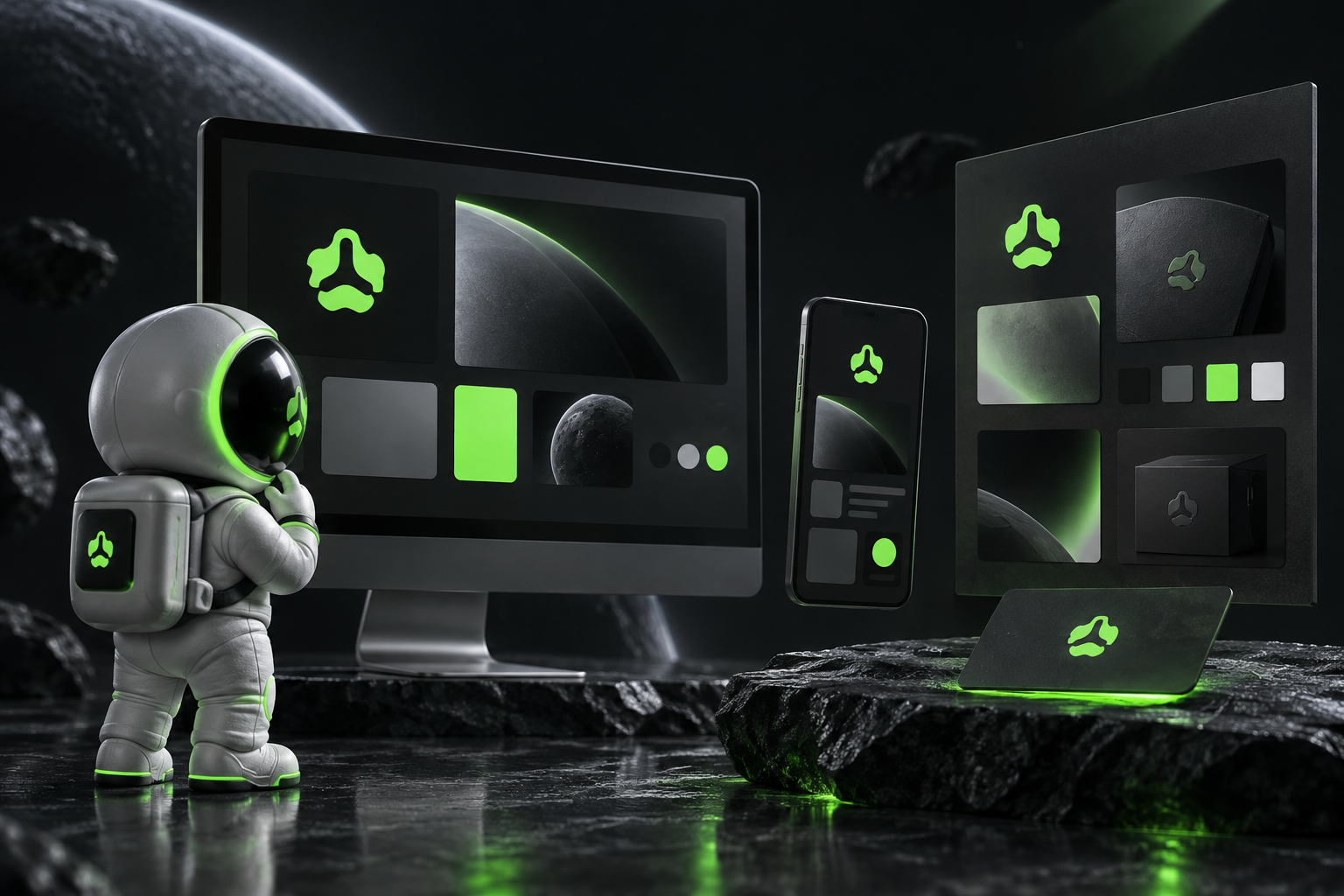
Does corporate identity design mean just a logo?
Corporate identity design brings together a logo, typography, a colour system, visual language and usage guidelines to make a business recognisable as a coherent whole. In digital settings, that system also needs to work across web pages, proposals and customer communications.
An impressive logo does not guarantee that the business will come across appropriately in every context. A company positioned around technical expertise, for example, needs more than decorative visuals on its website: it needs a hierarchy that makes its services easy to understand.
Start with the touchpoints that influence decisions
The first applications should be the places where customers assess the business and decide whether to get in touch. For a B2B service company, these might be the homepage, a service page and a proposal deck; for a product business, packaging and product pages may take priority.
Your brief should explain not only which files you need, but which decisions those materials should support. If the sales team redesigns every proposal from scratch, an editable proposal template may be more useful than a rarely used promotional item.
A website tests identity decisions in real conditions
A website reveals whether a corporate identity works across different screen sizes and content lengths. Typefaces need to support the languages you publish in, long service headings must fit the layout, and text-to-background contrast needs an accessibility review.
It therefore helps to create representative interfaces, such as a service page and a mobile menu, before finalising the identity direction. Seeing the logo, type scale and visual approach alongside real content makes implementation problems easier to spot early.
Deliverables should make everyday use easier
A useful handover includes reusable templates and clear application rules, not just logo files. Vector artwork, screen-ready exports, font licensing information and editable presentations should be specified according to the business's needs.
Web design values also need documentation: type scales, spacing, button styles and image guidelines should be passed to the developer. Turning these into a coded component library is a separate implementation task and should not be assumed to come automatically with the design handover.
How does identity investment connect to web and content?
Identity investment serves the business more directly when visual decisions are planned alongside website design and content structure. Corporate identity alone does not generate search visibility; SEO also requires technical accessibility, pages aligned with search intent and clear content.
tingdea can assess brand identity, web design and SEO services together through these connections. Bringing your existing materials, priority customer touchpoints and the needs of the people who will use the system helps turn an initial conversation into an actionable project scope rather than just a visual refresh.
Got a project on this topic?
Write to us