How Does the Logo Design Process Work?
Explore logo design strategy, originality checks, file formats and deliverables, then learn how to assess the right design and studio for your brand.

What should a good logo achieve?
A good logo should make a brand recognisable, support its positioning and remain functional wherever it appears. Looking attractive is not enough; it should be distinguishable on both a small profile image and a large sign.
A logo is a core element of brand identity, not the entire identity itself. Without typography, a visual language and a tone of voice that support the same direction, even a strong logo cannot create a consistent brand experience.
The logo design process starts with research
The logo design process should begin with a brief that defines the brand’s audience, value proposition and competitive distinction. This document anchors design decisions in shared objectives rather than personal preferences.
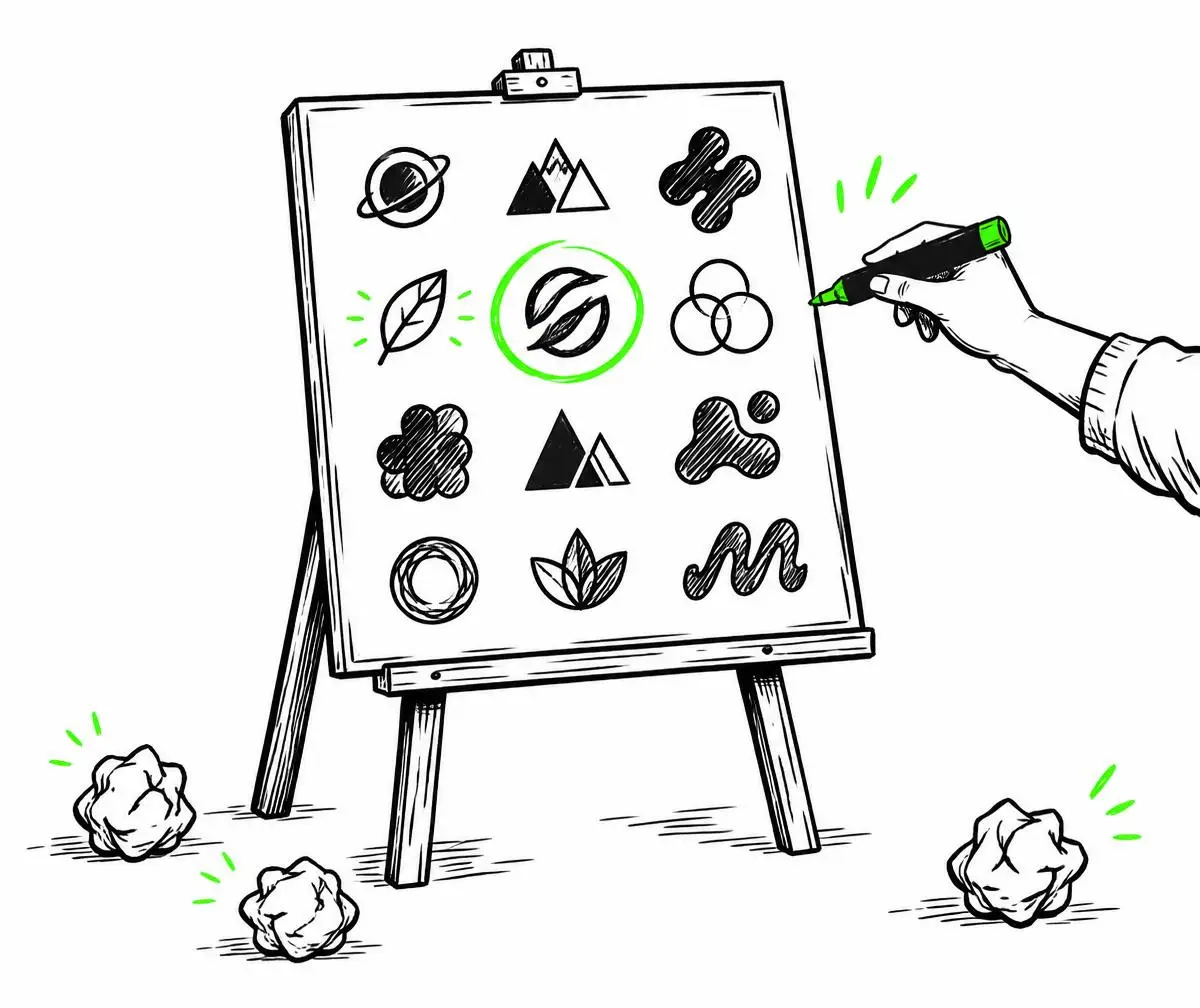
Research is followed by sketches that explore different ideas, with selected directions presented in relevant applications. Feedback focused on legibility, brand character and distinctiveness makes revisions more productive than a simple statement of preference.
Which tests should a logo pass?
A logo should be tested at small sizes, in a single colour, on different backgrounds and in real applications. Disappearing fine lines, cramped letter spacing or an unclear symbol can indicate that the design needs further work.
Originality checks should consider direct competitors as well as brands using similar symbols or typefaces. Visual research does not guarantee legal clearance; if trademark registration is planned, searches in the relevant markets and specialist advice should be considered separately.
Which files should a logo delivery include?
Logo delivery should include scalable vector files, exported images for everyday use and a concise usage guide. SVG and vector PDF files support scalable applications, while transparent PNG files suit many routine digital needs.
The package should clearly identify the primary logo, any necessary horizontal or vertical layouts, a symbol version and single-colour alternatives. Minimum sizes, clear space, print and screen colour values, font licences and usage rights should also be documented.
How should you assess logo pricing and choose a studio?
Logo design pricing depends on research depth, the scope of concept development, the revision process and the identity elements included in delivery. A quote for a logo file alone should not be compared like for like with a project that includes strategy and usage guidelines.
When choosing a studio, look beyond portfolio aesthetics to the reasoning behind design decisions, the deliverables and the clarity of usage rights. If you are considering working with tingdea, sharing your website, social media and print requirements early helps shape a proposal around your actual applications.
Got a project on this topic?
Write to us