Mobile App Development: Define Your First Release
Plan your first mobile app release around a complete user journey, a tested prototype and clear acceptance criteria before committing to development.

Which user problem should the first release solve?
The first release of a mobile app should help a priority user group complete an important task from beginning to end. For an appointment-based business, that means finding an available time, making a booking and receiving confirmation. The initial scope should address real obstacles to that task rather than copy a competitor's feature list.
Your project brief should explain who the user is, when they will open the app and what outcome they need. Existing website data, support requests and user interviews can inform that definition. Keep requests based solely on internal assumptions separate from needs supported by evidence.
Build a complete journey, not a feature list
The scope of a first release should be defined by the tasks users can complete, not the number of screens. In a booking app, a calendar screen is not enough: availability checks, booking creation and confirmation must work together. Recovery from mistakes or a lost connection belongs in the same journey.
For each feature, ask whether the core task can still be completed safely and clearly without it. If it can, advanced filters, loyalty features or personalisation may belong in a later release. Necessary permissions, accessibility and understandable error messages should not be dismissed simply to reduce scope.
What can a prototype validate before development?
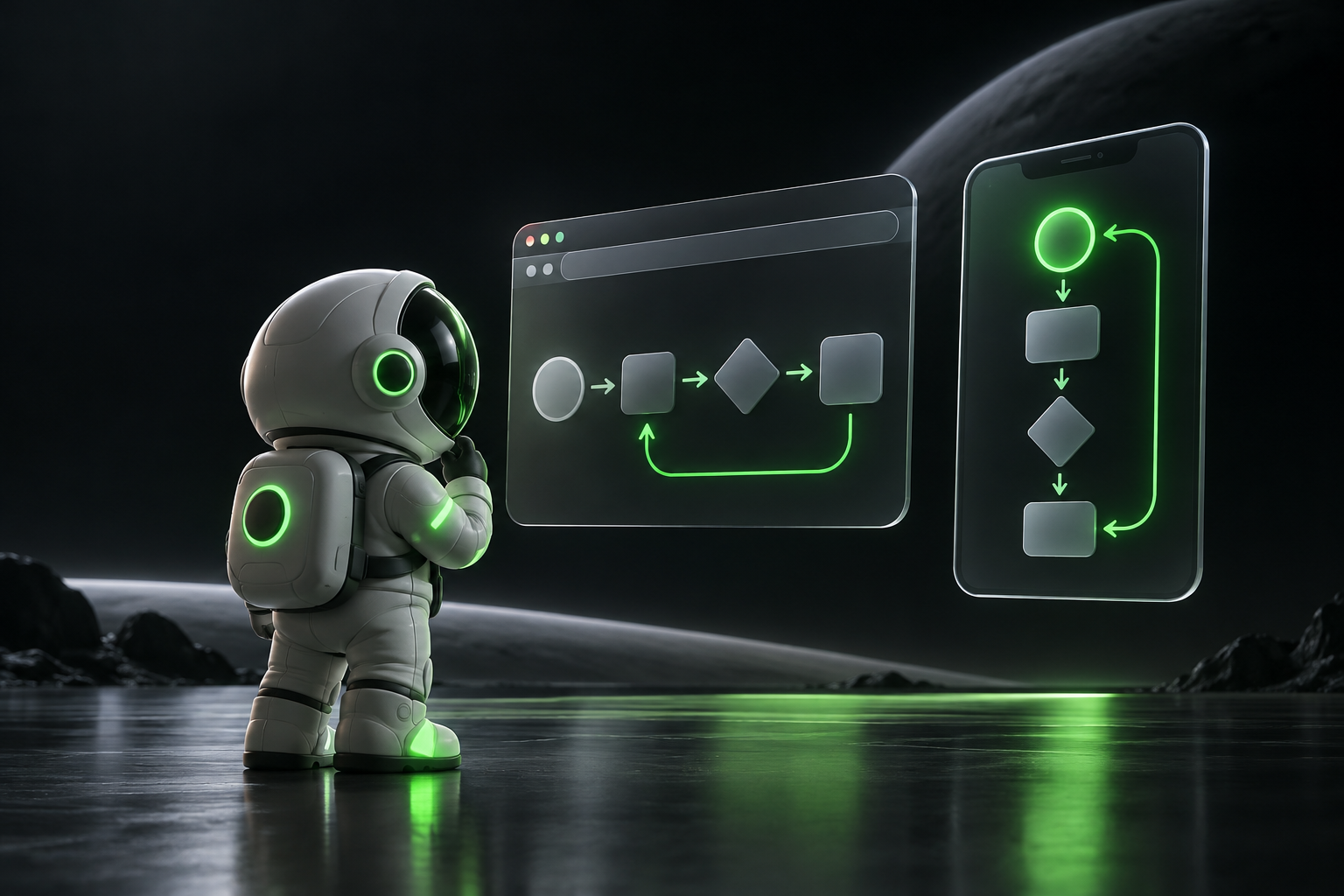
A clickable prototype lets you test whether users understand the proposed journey before building the software. It does not process live data or demonstrate technical performance; it helps evaluate screen sequences, information hierarchy and guidance. This makes design approval about more than visual preference.
Give participants who represent your target users specific tasks to complete without coaching them. Observe where they pause, which labels they misunderstand and whether they recognise that a task is finished. Use those findings to revise specific journey decisions rather than automatically redesigning the entire app.
How do behind-the-scenes operations affect scope?
A first mobile app release depends on the operations behind its screens as much as the screens themselves. For a booking app, define where staff will see reservations, where availability data comes from and how cancellations are handled. Without these decisions, a seemingly simple journey can introduce unexpected integration and administration requirements during development.
Document which information needs to move between the website, customer management system and app, including the direction of each transfer. If automation is involved, specify how failed actions will be detected and who will intervene. tingdea's web design, brand identity and AI automation services are relevant to aligning these touchpoints, while responsibility for mobile app development should be explicitly established in the proposal.
What should be documented before requesting a proposal?
Comparable mobile app development proposals require written user journeys, exclusions and acceptance criteria. Instead of stating that a booking feature will be built, describe observable behaviour: rechecking the selected time, creating the booking and displaying the result. This helps teams price the same outcome and makes delivery reviews more objective.
Include the prototype, integration list, content owners and designated approver in your proposal request. Agree at the outset how additional requests will be assessed for their impact on scope and timing. When speaking with tingdea, sharing your existing web experience, brand materials and automation needs helps distinguish the supporting workstreams around the mobile project.
Got a project on this topic?
Write to us